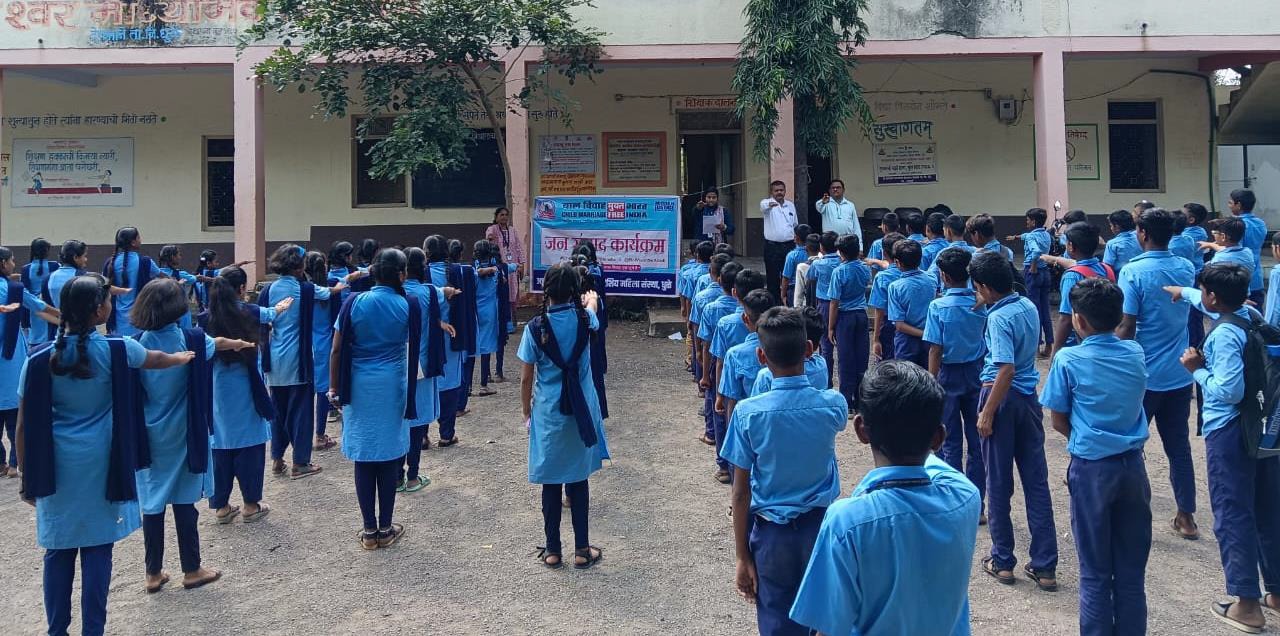
'Child Marriage Free India' - A Collaborative Initiative
Home/Project/‘Child Marriage Free India’ – A Collaborative Initiative
Partnership with Just Rights for Children — Dhule
Saptashrungi Bahuuddeshiya Mahila Sanstha, Dhule, has been working since 2006 across women’s development, child welfare, healthcare, rural development, and education. In July 2024 the organization joined the Just Rights for Children (JRC) network and partnered with Access to Justice to address child marriage and trafficking in Dhule district.
About JRC: A nationwide initiative across 26 states & 418 districts working to eliminate child marriage and trafficking with a target to reach zero prevalence by 2030.
Key Objectives
Awareness Campaigns: Educate rural communities on harms of child marriage & trafficking and legal protections.
Legal Awareness: Spread knowledge of the Juvenile Justice (JJ) Act, 2015 and the Prohibition of Child Marriage Act, 2006.
Reduce Child Marriages: Community-based interventions to prevent early marriages.
Empower Girls: Promote continued schooling and delay marriage until legal and emotional maturity.
Combat Trafficking: Raise awareness and take action against child trafficking in vulnerable areas.
Selection of Villages
50 villages in Dhule district have been selected for focused intervention based on population demographics, prevalence of child marriages, and community readiness to engage local leaders, educators, and families.
Current Situation in Rural Dhule
Poverty, lack of education, and entrenched cultural norms continue to drive child marriage in many villages. Girls are often married before physical and emotional maturity, leading to health risks, interrupted education, and higher vulnerability to trafficking and exploitation.
Legal Framework for Prevention
Juvenile Justice Act, 2015: Protection, rehabilitation, and legal support for children.
Prohibition of Child Marriage Act, 2006: Declares child marriage illegal and provides mechanisms for annulment and protection.
Child Protection Committees: Local bodies empowered to intervene and provide relief to at-risk children.
Impact & Way Forward
Community-Based Awareness: Regular campaigns in schools and village gatherings highlighting legal rights and harms of child marriage.
Educational Empowerment: Encouraging families to keep girls in school so they complete secondary education and delay marriage.
Collaboration: Working closely with local authorities and government bodies to enforce child-protection laws.
Monitoring & Support: Continued follow-up through Childline 1098 and community centers to support at-risk children and families.